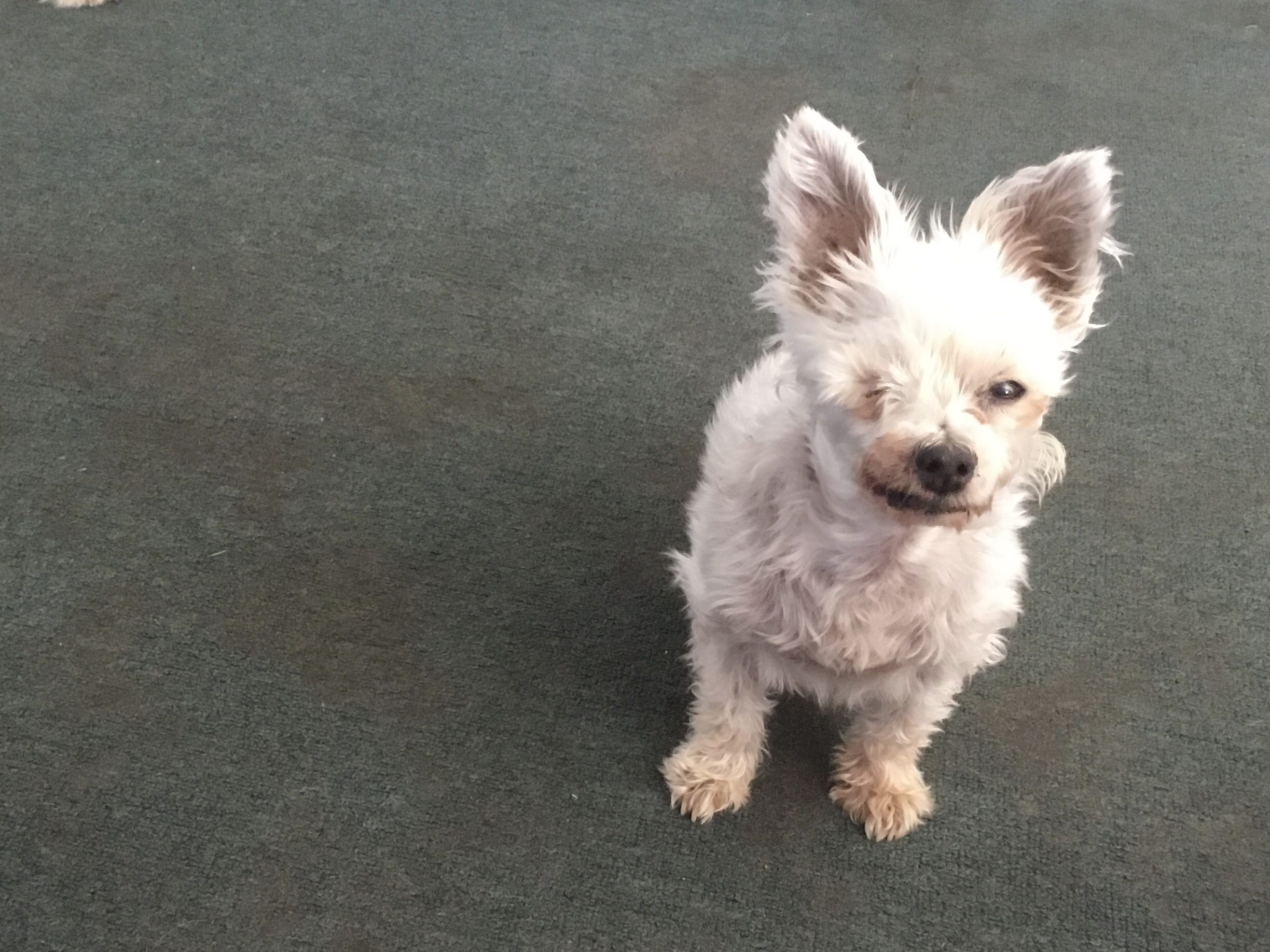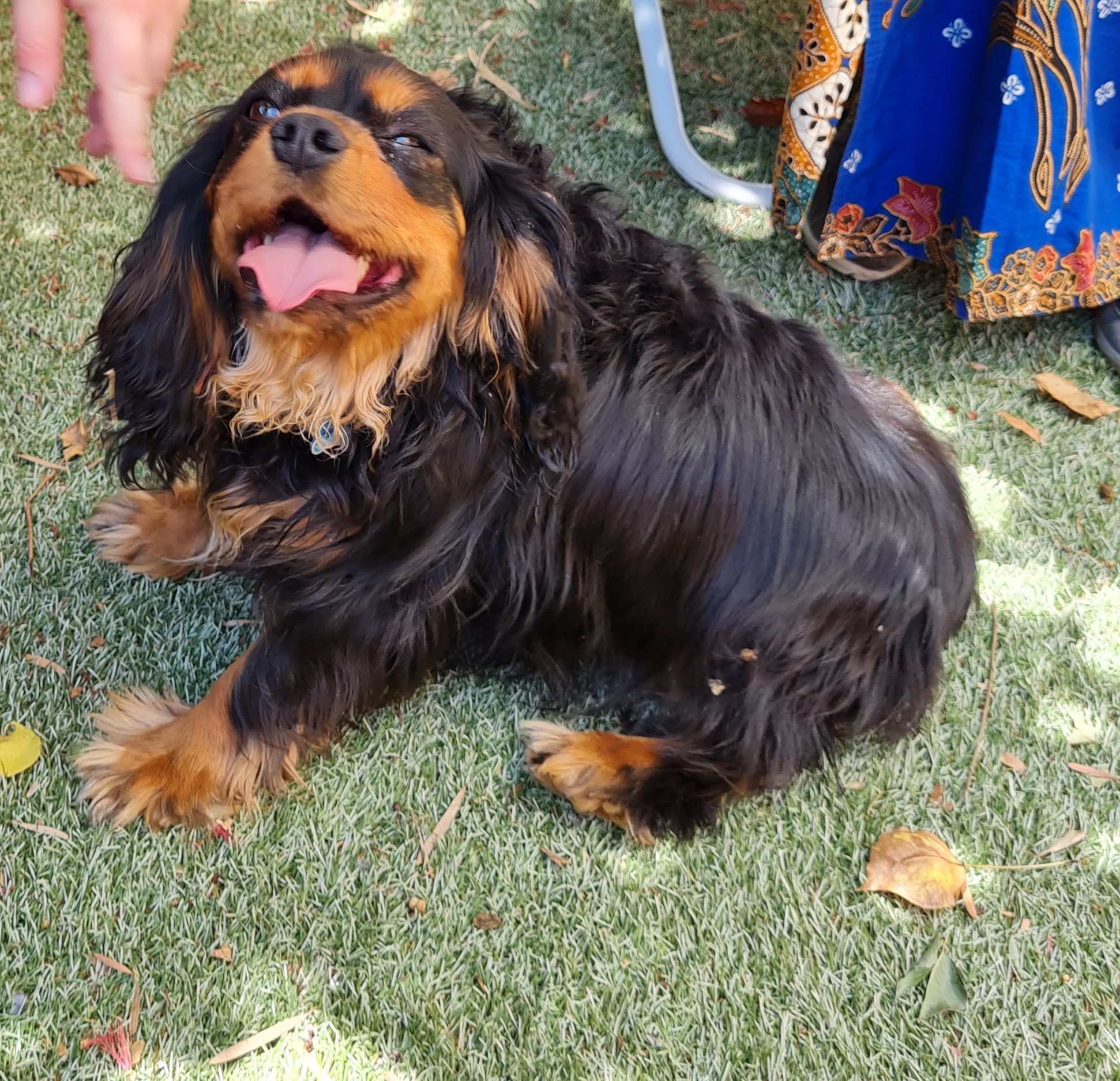
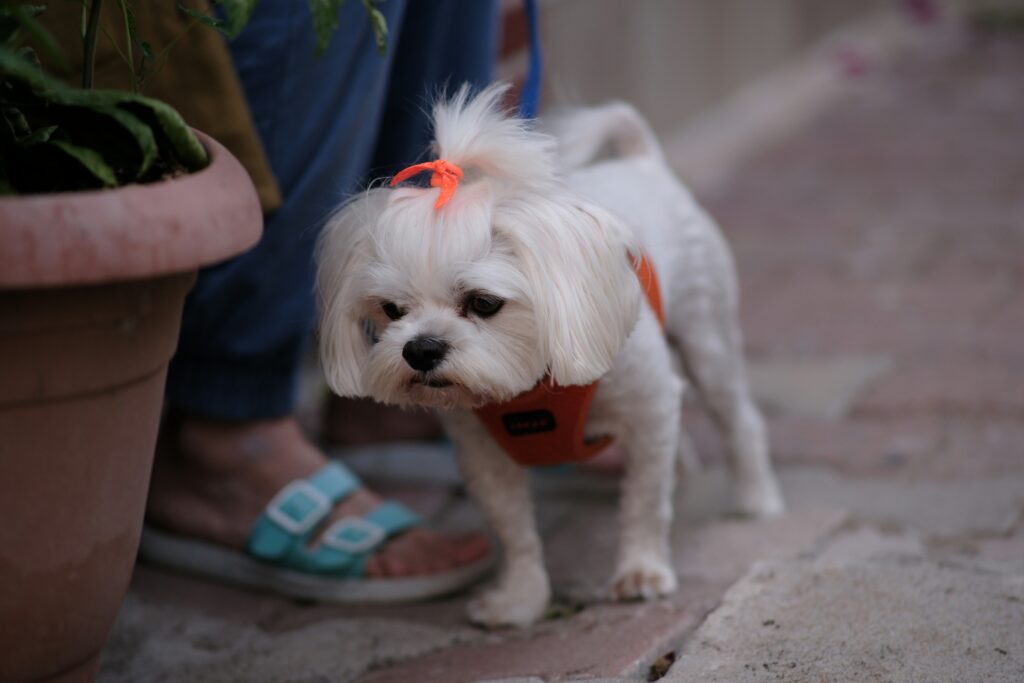
Small dogs move through a world that was never designed for their size.
Most environments — homes, streets, parks, public spaces — are built for humans and larger animals. Furniture is tall. Sounds are loud. Movements are fast. Hands reach down from above. Feet pass close by. Doors swing open at head height.
For a small dog, everyday life involves navigating a constant stream of oversized sensations.
Understanding this changes how we interpret their behaviour. It shifts our perspective from “what is my dog doing?” to “what is my dog experiencing?”
And that difference matters.
The World Looks Very Different from the Ground
A small dog’s physical viewpoint is permanently low to the ground. They see ankles before faces. Shadows before bodies. Movement before meaning.
What feels normal to us — a busy kitchen, people walking around, doors opening and closing — can feel overwhelming from below. There’s more visual motion, more noise, more unpredictability.
This doesn’t mean small dogs are fragile. But it does mean they process their surroundings with heightened awareness.
They notice details we don’t. They register changes in environment faster. They respond more quickly to sound, movement, and emotional shifts in the people around them.
Their world is simply more intense.
Sensory Experience Is Amplified
Small dogs often experience their senses more acutely than larger dogs.
Sound
A raised voice, a dropped object, a door slamming — these are not background noise to a small dog. They can feel abrupt, startling, or even threate
Touch
Hands are large. Hugs are heavy. Lifting involves losing control of the ground beneath them. Even well-meaning physical contact can feel intrusive if it’s not initiated gently.
Smell
Like all dogs, small dogs rely heavily on scent. But because their world is physically smaller, smells arrive more quickly and more densely. A new environment can feel information heavy.
Their nervous systems are constantly interpreting the world.
Not reacting to it — interpreting it.
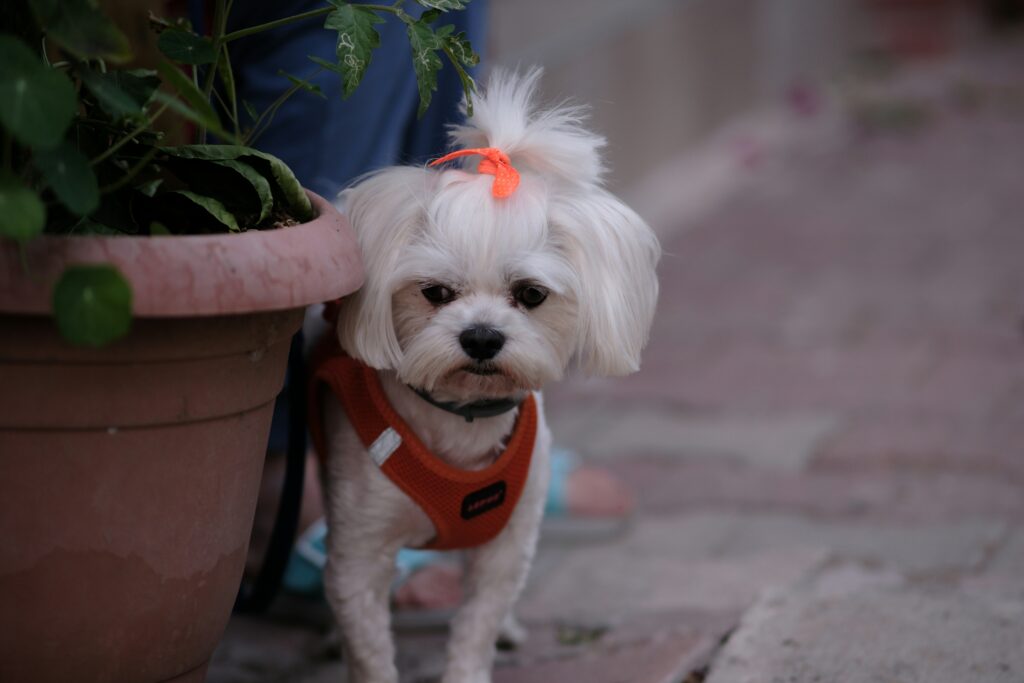
Small Dogs Live Closer to Human Emotion
Toy dogs tend to spend more time indoors, more time on laps, more time in shared spaces. They are physically closer to human life than many larger dogs.
This proximity shapes how they experience the world.
They pick up:
- tone of voice
- emotional shifts
- stress levels
- routines
- tension between people
Often before we consciously realise anything has changed.
Small dogs don’t just live with us — they live inside our emotional environment.
Which is why they can seem intuitive, sensitive, or “in tune” with how we’re feeling.
They are.
Vulnerability Is Part of Their Reality
A small dog’s size makes them more physically vulnerable in everyday situations.
They are easier to trip over. Easier to miss in crowded spaces. More affected by temperature, noise, and sudden movement. Less able to escape uncomfortable situations on their own.
This doesn’t make them weak.
It makes them adaptive.
Small dogs often develop:
- heightened awareness
- strong attachment to safe people
- sensitivity to emotional cues
- cautious behaviour in unfamiliar spaces
These traits aren’t personality flaws. They’re survival skills.
Why Some Behaviours Make More Sense When You Zoom Out
Once you understand how small dogs experience the world, many common behaviours begin to look different.
Clinginess becomes a need for safety.
Barking becomes communication.
Hesitation becomes assessment.
Shyness becomes self-protection.
What sometimes gets labelled as “difficult behaviour” is often a rational response to a world that feels big, fast, and unpredictable.
Small dogs aren’t overreacting.
They’re responding to their scale of reality.
The Emotional Impact of Being Small
Small dogs often form strong bonds because they rely more heavily on human protection.
Their world contains:
- more potential threats
- more environmental unpredictability
- more sensory input
So, they gravitate toward:
- familiarity
- routine
- trusted people
- consistent environments
This isn’t dependency in a negative sense. It’s emotional intelligence shaped by experience.
They learn who keeps them safe.
They learn where they belong.
They learn what feels secure.
And they structure their world around that knowledge.
Seeing the World Through Their Eyes
When we begin to view small dogs as inhabitants of a different scale, something shifts in how we relate to them.
We become:
- more patient
- more gentle
- more observant
- less reactive
We stop asking why they behave a certain way and start asking what they might be feeling instead.
That’s not indulgence.
That’s empathy.
What Small Dogs Teach Us Without Trying
Small dogs quietly teach us to:
- slow down
- pay attention
- notice emotional nuance
- respond gently
- create calm environments
Not because they demand it — but because their size makes those needs visible.
They live in a world that feels bigger than they are.
And they navigate it with awareness, sensitivity, and resilience.
Once you understand that, you don’t just see small dogs differently.
You start moving through the world differently too.