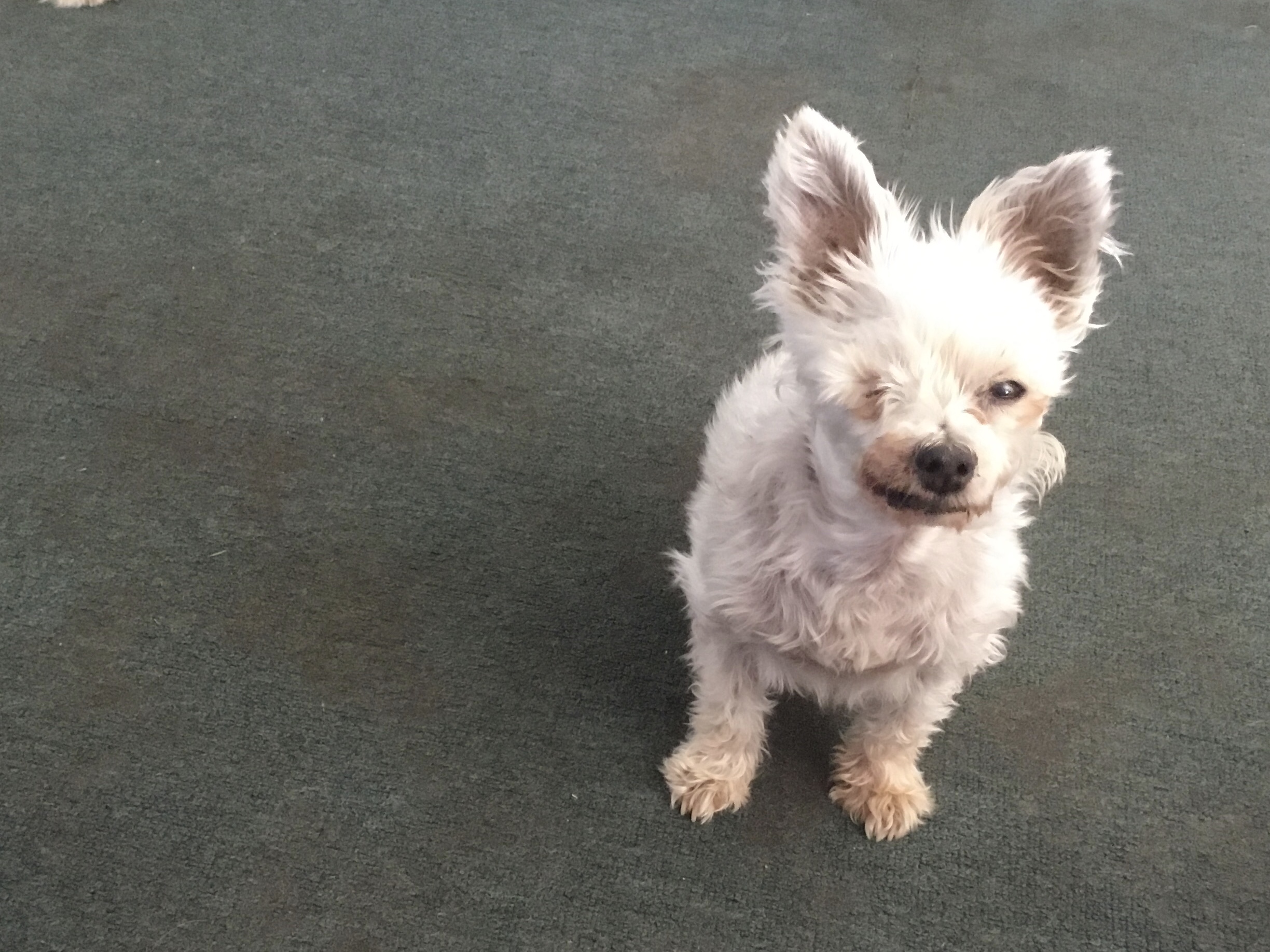

There’s a familiar moment on almost every dog walk.
You’re ready to keep moving, but your dog has stopped. Again.
This time, it’s a patch of grass. Before that, it was a tree. A few meters back, it was a lamppost that apparently required a very thorough investigation.
It can be tempting to give the lead a gentle tug and say, “Come on.”
But to your dog, those stops aren’t necessarily interruptions to the walk.
They may be the most interesting part of it.
Dogs experience much of their world through scent. When your small dog lowers their nose and takes their time investigating, they’re gathering information that we simply can’t perceive.
So perhaps a good walk isn’t always about how far you go.
Sometimes, it’s about how much time you give your dog to explore along the way.
Why Is Sniffing So Important to Dogs?
We tend to experience a walk visually.
We notice the houses, trees, people, traffic and other dogs. Your dog notices these things too, but their nose gives them access to another layer of information.
Dogs have an extraordinary sense of smell, with hundreds of millions of scent receptors compared with the few million found in humans. Their sense of smell allows them to gather detailed information about their surroundings.
That interesting patch of grass may carry traces of another dog or animal. A tree trunk can hold scents left by dogs that passed earlier. Even familiar places can smell different from one day to the next.
So when your dog stops to investigate, they aren’t necessarily being distracted from the walk.
Sniffing is part of the walk, an important way for dogs to understand their environment.
A Sniff Walk Is Different From An Exercise Walk
Not every walk has to serve the same purpose.
Sometimes you might head out for a brisk walk because your dog needs physical activity. At other times, you’re simply taking them outside for a toilet break.
A sniff walk, sometimes called a scent walk, has a different purpose.
Instead of concentrating on distance or pace, you allow your dog more time to investigate their surroundings with their nose.
That might mean covering surprisingly little ground.
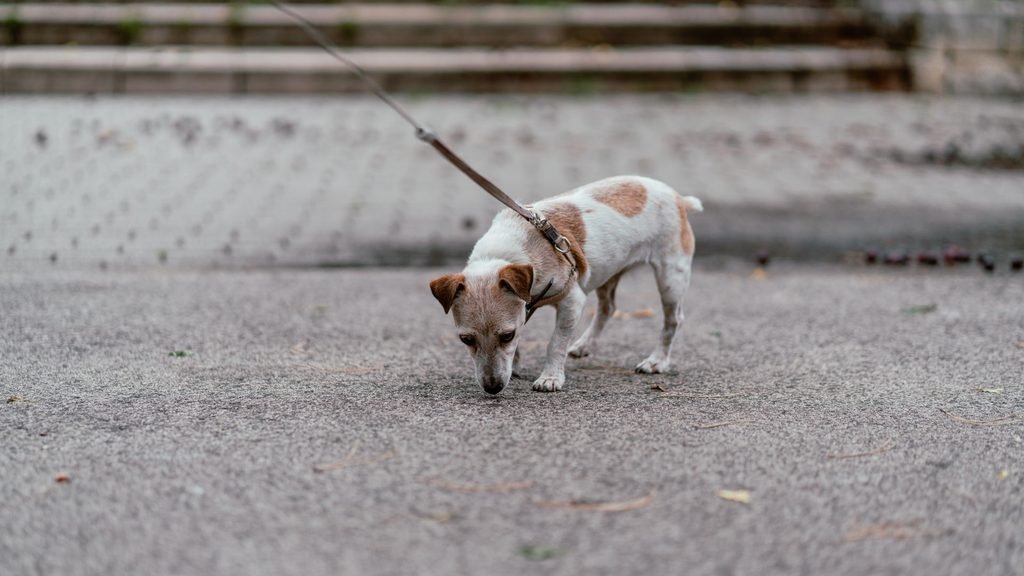
Your dog stops at a tree.
You wait.
They wander over to some grass.
You follow.
They spend what seems like an unreasonable amount of time examining one particular leaf.
And that’s okay.
Your dog still needs appropriate physical activity. Sniffing doesn’t automatically replace that.
But a walk can exercise more than your dog’s legs.
Sniffing Is Mental Enrichment
If you’ve ever come home exhausted after concentrating intensely on something, you’ll know that we don’t have to run around to become tired.
Mental activity takes effort too.
It’s similar for dogs.
Following scents, distinguishing one smell from another and investigating changes in the environment all require concentration.
This is why a slow walk filled with opportunities to sniff can be enriching even if you don’t travel very far.
That can be especially useful on days when a long walk isn’t practical.
But it also gives us another way to think about what constitutes a “successful” walk.
You don’t necessarily need to return home having completed a certain number of miles.
Your dog may have had a wonderfully interesting outing without making it very far around the block.
Why This Matters for Small Dogs
Sniffing is important for dogs of every size. It’s not something unique to toy breeds.
But there is something worth considering when we look at the walk from a small dog’s perspective.
Much of a little dog’s life is decided by humans.
And because small dogs are so physically easy to move, it’s particularly easy for us to make decisions for them.
We can pick them up.
Steer them away.
Hurry them along.
Carry them when we want to move faster.
Allowing your dog to choose where they’d like to sniff is a small way of giving some of that decision-making back.
Current guidance on sniff walks also emphasizes this element of choice and autonomy — allowing dogs, where it is safe, greater opportunity to determine what they investigate and sometimes which direction they explore.
It doesn’t mean your dog gets to run the household.
It simply means that sometimes the walk can belong to them.
Let Your Small Dog Set the Pace Sometimes
If you’re used to walking with a destination in mind, this can take some adjustment.
Try heading out one day without worrying about how far you get.
Let your dog stop.
Give them time to sniff.
If it’s safe, allow them some choice about whether to investigate the grass, a tree or the edge of the path.
You may notice that your dog’s preferred walking pace isn’t really a steady pace at all.
Walk.
Stop.
Sniff.
Wander.
Stop again.
Look around.
Sniff some more.
That’s perfectly fine on a walk where exploration is the goal.
It can also be an interesting exercise for us. Instead of constantly asking your dog to pay attention to you, spend some of the walk paying attention to them.
Watch Your Dog’s Body Language Too
Sniffing doesn’t automatically mean your dog is relaxed.
This is where your knowledge of small dog body language becomes important.
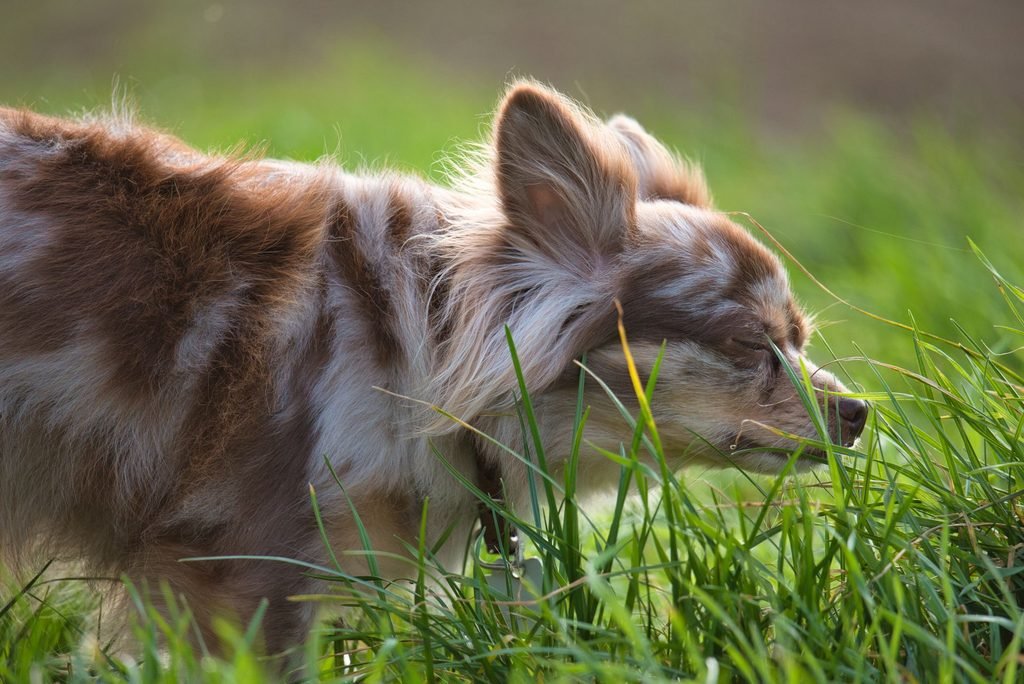
A dog leisurely investigating a grassy verge with a loose body may look very different from a dog frantically sniffing while remaining tense and highly alert to everything around them.
Look at the whole dog.
Is their body loose?
Are their movements easy?
Do they seem comfortable exploring?
Or are they crouched, tense, scanning the environment or repeatedly trying to move away?
If your dog appears uncomfortable, slowing down isn’t always enough. They may need greater distance from whatever is worrying them, a quieter route or simply the opportunity to go home.
What About Stopping Every Few Steps?
This is where real life enters the picture.
Sometimes you genuinely need to get somewhere.
You don’t have to stand beside the same shrub for ten minutes every time you leave the house.
Your dog’s walks can have different purposes.
On one walk, you might move at a steadier pace. On another, you might deliberately build in more time for sniffing. You can also alternate periods of walking with opportunities to stop and investigate.
Some trainers use a cue such as “go sniff” so the dog learns when they’re free to explore before being asked to move on again. American Kennel Club suggests this approach as one way of combining loose-lead walking with regular opportunities to sniff.
The aim isn’t to remove every boundary.
It’s simply to make sniffing a legitimate part of the walk rather than something your dog is always being asked to stop doing.
Does a Sniff Walk Replace Exercise?
Not necessarily.
A slow sniff walk provides mental enrichment and some physical activity, but dogs still need exercise appropriate to their age, health and individual needs.
Some toy dogs are energetic little athletes. Others are happier with gentler activity. Puppies, older dogs and dogs with health or mobility problems have different needs again.
That’s why it’s useful to think of physical exercise and mental enrichment as related but not identical.
A sniff walk gives you another tool rather than replacing everything else.
You Don’t Need a Special Destination
One of the loveliest things about sniffing is that you don’t need to take your dog anywhere extraordinary.
To us, the same neighborhood route might become boring.
To your dog, it keeps changing.
Another dog walked past.
Someone’s cat crossed the nature strip.
It rained overnight.
A bird was on the ground.
Something unfamiliar has been carried on the wind.
Yesterday’s walk and today’s walk may look identical to you while smelling remarkably different to your dog.
A quiet grassy area, a leafy street or even a familiar route can offer plenty to investigate.
For a small dog living in an apartment, these opportunities may be particularly valuable because there may be fewer chances to wander and explore independently outside.
Your dog doesn’t need access to every interesting smell.
Keep them away from traffic, unsafe plants or substances, rubbish and anything they might try to eat. Be considerate around private property and don’t allow your dog to approach unfamiliar people or dogs simply because they want to investigate.
A comfortable, well-fitting harness can also be useful for small dogs, particularly if your walk involves plenty of stopping, changing direction and exploring.
And remember that giving your dog choice doesn’t mean abandoning safety.
Think of it as choice within sensible boundaries.
You decide where it’s safe to explore.
Your dog gets a little more say in what happens once you’re there.
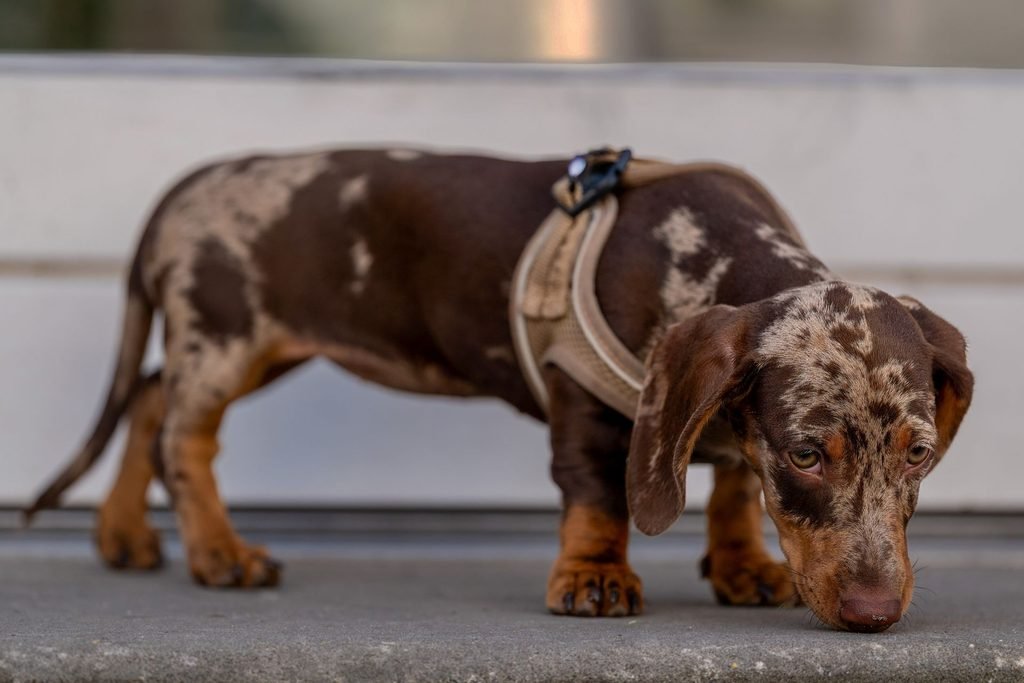
Try a Sniff Walk
The next time you have nowhere you need to be, try something different.
Take your small dog somewhere safe and relatively quiet.
Then slow down.
Instead of counting steps or measuring distance, see where their nose takes them.
Notice what captures their attention.
Watch their body language.
Let them linger a little longer than usual.
You might cover half the distance you normally would.
But from your dog’s perspective, it could be a much bigger adventure.
Because sometimes the best walk isn’t the one that takes your dog the furthest.
It’s the one that gives them time to experience the world.
FAQs
Why does my dog sniff everything on walks?
Dogs rely heavily on their sense of smell to understand their surroundings. Sniffing can provide information about other animals, people and changes in the environment, so something that looks uninteresting to us may contain plenty of information for a dog.
Is sniffing on walks good mental stimulation for dogs?
Yes. Sniffing engages a dog’s powerful sense of smell and requires them to process information about their environment, making it a useful form of mental enrichment.
Do sniff walks tire dogs out?
They can. Exploring scents requires concentration, so a relatively short sniff-focused walk may provide substantial mental stimulation even when your dog doesn’t cover much distance.
How long should a sniff walk be?
There is no universal duration. Your dog’s age, health, fitness, environment and individual temperament all matter. The aim is not to reach a particular distance but to provide safe opportunities to explore. AKC notes that quality can matter more than length on sniff-focused walks.
Should every dog walk be a sniff walk?
No. Different walks can serve different purposes. Your dog may have exercise walks, toilet breaks, training walks and slower walks devoted to exploring. Even on a regular walk, you can build in periods when your dog is allowed to stop and sniff.
Should I let my dog choose where we walk?
You can offer some choice when it’s safe. For example, you might let your dog choose which patch of grass to investigate or occasionally which direction to take. You should still guide them away from roads, hazards, private property and unwanted encounters with other dogs or people.